What is 3PL? Why Growing Iraqi E-commerce Stores Need to Move Out of the Living Room
In the early days, this is a smart move. It keeps your costs low and gives you complete control over every single package.
But as your daily orders grow from 5 to 20, 50, or 100+ orders a day, home-warehousing quickly turns into a logistical nightmare. Boxes take over your living space. Inventory counts get messy. Packing orders eats up hours of your day. Worst of all, you spend all your time taped to a packing desk instead of growing your brand.
If you find yourself drowning in boxes, it is time to learn about 3PL (Third-Party Logistics) and Fulfillment Services.
This comprehensive, step-by-step guide will explain what these services mean in plain language, how they work in Iraq, and why making the transition is the absolute secret to scaling your online store from a small side project into a major retail brand.
What Exactly is 3PL and E-commerce Fulfillment?
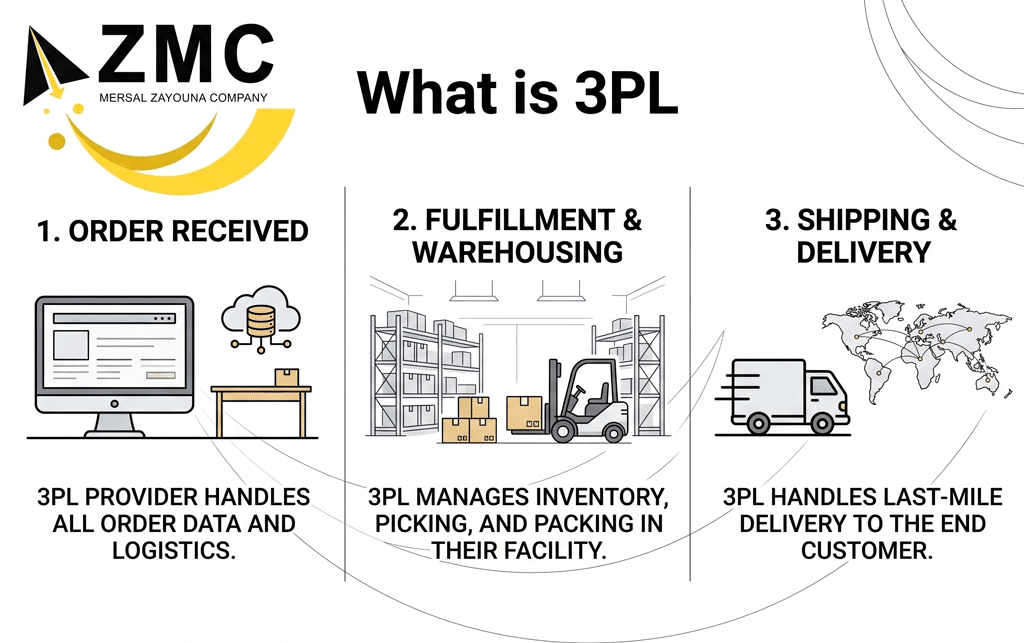
In plain terms, a 3PL company is an outside business that handles all your physical inventory, packaging, and shipping for you. Instead of managing a warehouse, hiring packing staff, and dealing with couriers yourself, you outsource all of these operational tasks to a specialized partner.
When people talk about Fulfillment Services, they are talking about the exact step-by-step process of receiving an online order and getting it into the customer’s hands.
To help you understand how this works, let’s break down the traditional journey of a product under a 3PL model into five simple steps.
Step 1: Receiving and Inbound Logistics
When the shipment arrives at the warehouse, the 3PL team unloads the boxes, counts the items to make sure nothing is missing or broken, and inputs the numbers into their digital tracking system.
Step 2: Storage and Inventory Management
Because everything is logged digitally, the system knows exactly where every single item is located. You can log into an online dashboard at any time to see exactly how many units of each product you have left in stock. This completely eliminates the guesswork of counting items manually in your closet.
Step 3: Pick and Pack
When a customer buys something from your online store or Instagram page, the order details are sent to the 3PL warehouse.
- Picking: A warehouse worker receives a digital "pick list" and goes directly to the exact shelf where your product is stored to grab the item.
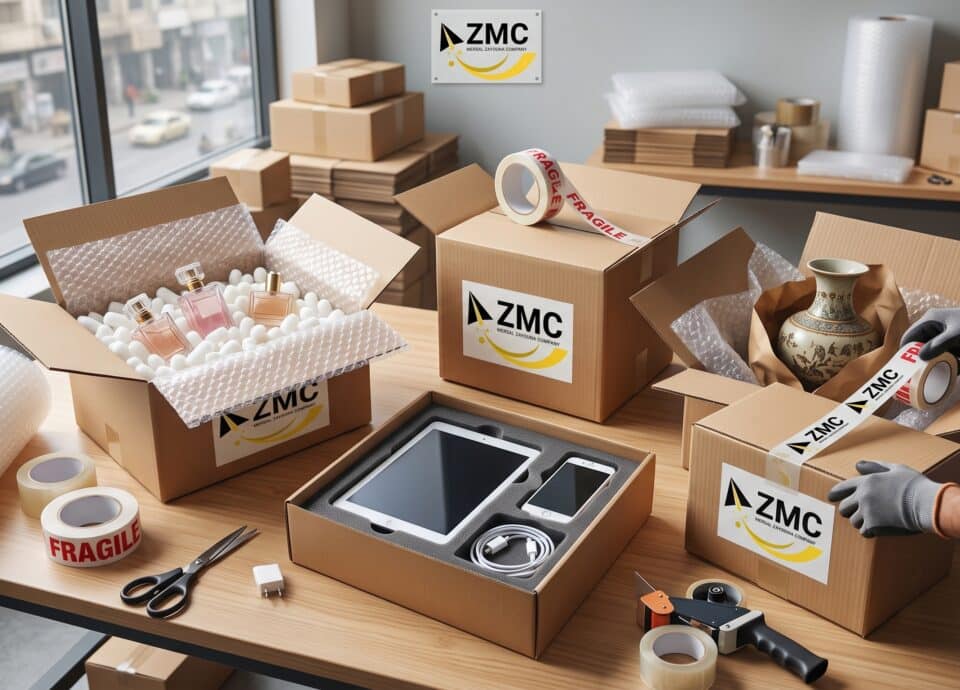
- Packing: The worker takes the item to a packing station. Here, they select the right size box or shipping bag, wrap the item securely in protective bubble wrap, seal the package, and print the shipping label with the customer's delivery details.
Step 4: Shipping and Last-Mile Delivery
Step 5: Reverse Logistics (Returns Management)
In e-commerce, some customers will inevitably want to return their items or refuse the delivery at the door. When this happens, the courier brings the package back.
Under a 3PL system, the returned item goes straight back to the 3PL warehouse. The team inspects the item. If it is in perfect condition, they log it back into your digital inventory so it can be sold to a new customer. If it is broken or open, they set it aside and notify you.
The Hidden Crises of Home-Warehousing
What they do not realize is that home-warehousing is not free. It costs you an enormous amount of time, causes expensive mistakes, and limits how much money your business can actually make.
Here are the four most common crises that happen when an online store tries to run logistics out of a home for too long.
1. The Time Trap
If you are spending 5 hours every single day packing boxes, when are you finding new products? When are you talking to suppliers? When are you creating video content for Instagram and TikTok? When are you looking at your financial numbers?
You become a warehouse worker in your own company instead of the chief executive. Your business stops growing because you physically do not have the time to grow it.
2. Space Limitations and Household Stress
Houses are designed for living, not for commercial logistics. When you start storing hundreds of items at home, your environment deteriorates quickly.
- Boxes pile up in hallways and block walkways.
- Your living room looks like a chaotic loading zone.
- Products spill over into bedrooms and closets.
This creates huge personal stress. It also makes it incredibly easy to lose track of items. When inventory is scattered across different rooms, you will eventually find yourself telling a customer an item is out of stock when it is actually just buried under a pile of boxes in the corner.
3. High Human Error Rates
When you are tired, distracted, or rushing to finish packing before the courier van arrives, you will make mistakes.
- You will accidentally put a size Small dress into a box instead of a size Large.
- You will ship a blue phone case instead of a black one.
- You will forget to include an accessory that belongs in the box.
In markets like the United States, a shipping mistake means paying for a return label. But in Iraq, where Cash on Delivery (COD) is the primary payment method, a shipping mistake is far more dangerous. When a customer opens a package at the door and sees the wrong color or size, they will simply refuse the order and hand it back to the courier. You instantly lose the money you spent on the outgoing shipping fee, and you have to pay a return fee to get the item back.
4. Inability to Handle Sudden Sales Surges
If you are home-warehousing, this sudden success turns into a disaster. You cannot physically pack 200 orders fast enough on your own. Your shipping times slow down drastically. Customers get tired of waiting, cancel their orders, and buy from a competitor instead. You waste your advertising budget because your home infrastructure cannot handle your marketing success.
The Major Business Benefits of Transitioning to a 3PL
Moving your inventory to a professional fulfillment center like Mersal Zayouna completely changes the way your business operates. It removes the physical limits on your growth and provides several massive advantages.
| Area of Operations | Home-Warehousing Model | Professional 3PL Model |
|---|---|---|
| Storage Space | Limited to spare rooms, closets, and hallways. | Scalable commercial warehouse space on demand. |
| Inventory Tracking | Manual counting, Excel sheets, and visual checks. | Automated digital tracking with real-time stock updates. |
| Packing Quality | Inconsistent, basic materials, hand-written labels. | Standardized, high-grade, secure packaging. |
| Daily Order Capacity | Maxes out at what you can physically pack per day. | Unlimited capacity to handle hundreds of daily orders. |
| Focus of Owner’s Time | Tied down to physical labor and packing boxes. | Dedicated entirely to marketing, sourcing, and strategy. |
1. Unlimited Scalability
The biggest benefit of a 3PL is that it grows with you. If you have a slow month and only sell 30 items, you only pay for the exact shelf space and packing services you used. If your business suddenly explodes and you sell 1,500 items the next month, the warehouse handles it completely seamlessly. They have the space, the digital systems, and the staff to manage the spike without you lifting a finger.
2. Perfect Accuracy and Advanced Systems
Professional fulfillment centers use specialized software called Warehouse Management Systems (WMS). Every item has a barcode. When an item is picked and packed, it is scanned with a digital reader. If a worker tries to put the wrong item into a box, the system alerts them immediately. This reduces your shipping errors to nearly zero percent, protecting your profits from refused COD orders.
3. Professional Packaging That Builds Customer Trust
When a customer receives an order from your store, the packaging is the very first physical contact they have with your brand. If it arrives in a flimsy, recycled plastic bag covered in messy handwriting, they instantly feel nervous.
A professional 3PL ensures your items are packed in clean, sturdy, standardized, or branded packaging. When the delivery courier arrives, that premium presentation makes the customer feel secure handing over their hard-earned cash, directly lowering your refusal and return rates.
4. Strategic Warehouse Locations
If your home is in a small town or outside the major commercial hubs, shipping items across Iraq can take a long time and cost a lot of money. Major 3PL companies position their fulfillment centers in key geographic areas, such as Baghdad. Storing your stock in a central hub means your products are already close to the largest concentration of online shoppers in the country. This dramatically speeds up your delivery times and lowers your overall shipping costs.
How a 3PL Works within the Iraqi E-Commerce Landscape
Every market has its own unique characteristics, and Iraq is no exception. To build a successful online store here, your fulfillment strategy must adapt to local real-world conditions. A localized 3PL partner helps you navigate these specific challenges in three distinct ways.
1. Mastering the Cash on Delivery (COD) Cycle
Managing COD on your own is highly complex. You have to wait for couriers to collect the cash, track which deliveries are paid, and wait for the courier company to transfer the money to your bank account.
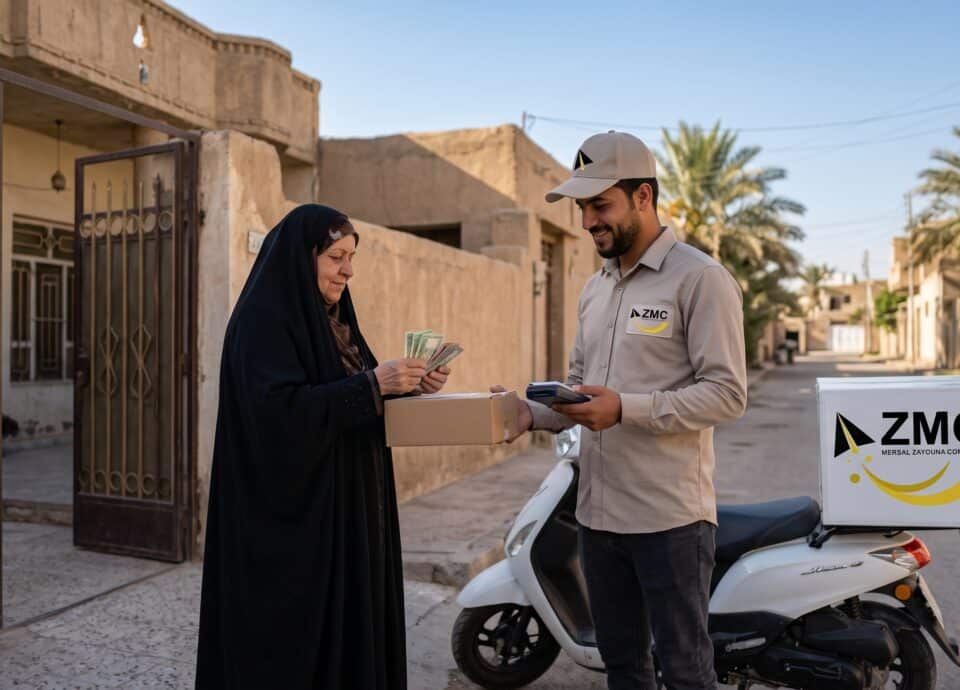
A professional e-commerce 3PL company has deep experience with COD networks. They handle the entire cash collection process seamlessly, reconcile the amounts digitally against your orders, and pay out your earnings on a dependable schedule. This keeps your cash flowing smoothly so you can buy more inventory without delays.
2. Solving Last-Mile Address Challenges
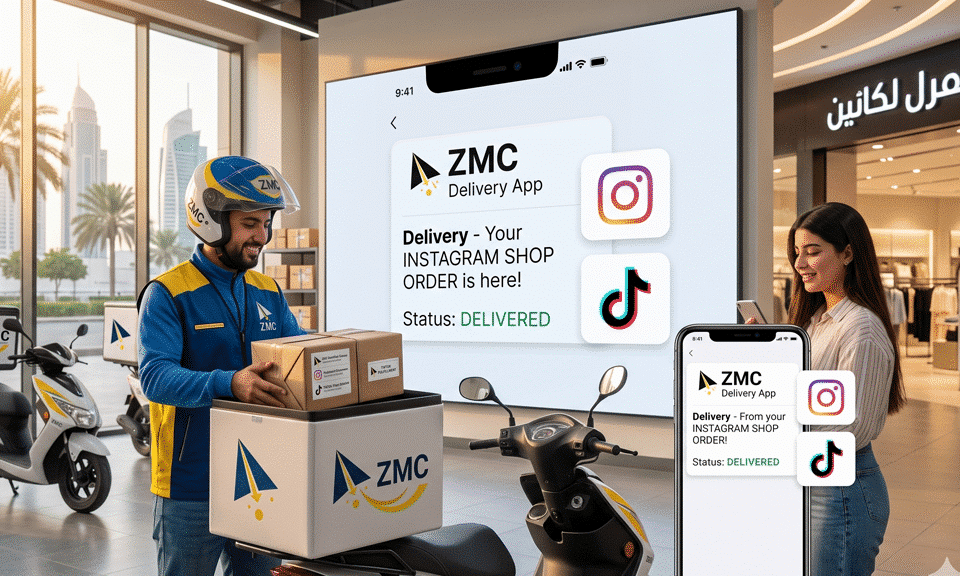
A local 3PL partner works with couriers who know these neighborhoods perfectly. They understand how to communicate with Iraqi customers politely over the phone, arrange precise delivery times, and navigate local transit routes efficiently. This localized knowledge ensures your packages actually reach their destination instead of getting lost or sent back.
3. Streamlining the Return Process (Reverse Logistics)
A 3PL automates this entire headache. Refused packages go straight back to the central warehouse hub. The staff quickly opens the shipping box, checks the product quality, re-packages it, and updates your digital inventory database. This ensures your items are ready to be sold again immediately, keeping your stock active and minimizing losses.
Is Your Business Ready for a 3PL? A Simple Self-Check
How do you know when it is officially time to pack up your inventory and move it to a professional center? You do not need to wait until you are a giant company. If you answer "yes" to two or more of the following questions, your business is ready for a 3PL transition right now.
- Are you spending more than two hours a day packing boxes and coordinate with couriers? If yes, you are losing valuable time that should be spent on marketing and growing your sales numbers.
- Are you running out of physical storage space at home? If boxes are taking over your bedroom, closets, kitchen, or living room, you have outgrown your home-warehousing setup.
- Are you noticing an increase in shipping mistakes? If you are accidentally sending customers the wrong sizes, colors, or quantities, your manual tracking system is failing.
- Do you want to scale your business but feel afraid of getting too many orders? If the idea of receiving 100 orders in a single day scares you because you cannot pack them all, your infrastructure is holding you back.
Let Professional Logistics Drive Your Growth
Moving away from home-warehousing and partnering with a professional 3PL provider is the single most important step you can take to unlock your company's true potential. It eliminates manual errors, improves your customer experience, secures your cash flow, and frees up your time so you can focus entirely on what you do best: building a phenomenal brand and driving sales.
Take the Leap with Mersal Zayouna
Stop letting physical boxes limit your business dreams. At Mersal Zayouna, we serve as the reliable, professional operational backend for Iraq's most ambitious online brands. We store your products safely in our modern fulfillment centers, pack your orders with absolute precision, and use our optimized courier network to deliver across Iraq and handle your COD collections flawlessly.
Contact our team today to find out how easy it is to move your stock out of your home and into a professional system built for massive growth.
Frequently Asked Any Questions
Here are answers to the most common questions people ask about shipping in Iraq.